First Impressions
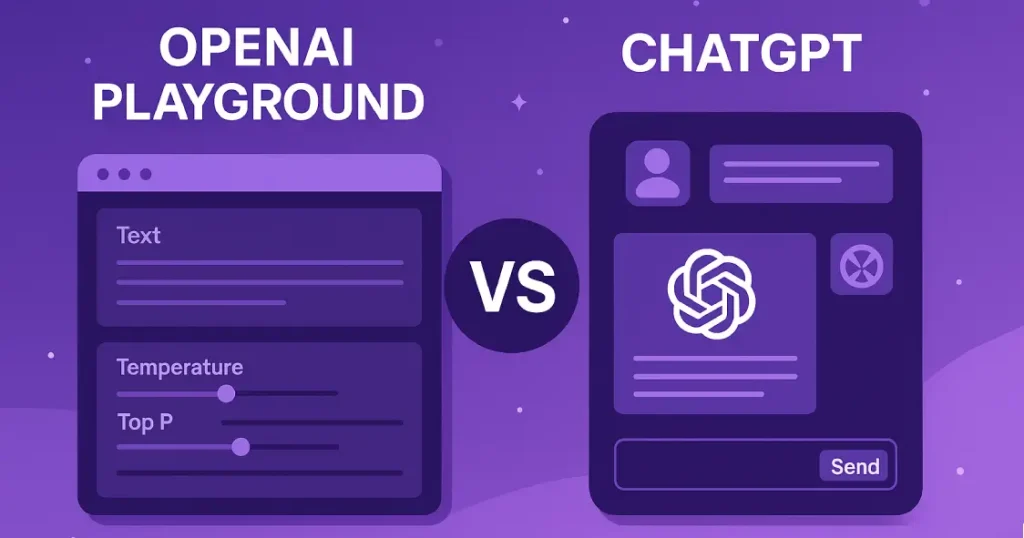
The most surprising result from my February 17, 2026 test day was this: ChatGPT solved a messy planning task in under five minutes, while OpenAI took longer to set up but gave far tighter control once it was running. That pattern repeated all day. ChatGPT felt like opening a finished appliance. OpenAI felt like buying a workshop full of power tools.
I tested both in three conditions: solo writing, small-team research handoff, and a prototype automation flow. For ChatGPT, I used the web app with free and paid account behavior in scope. For OpenAI, I evaluated the API platform workflow using published model pricing and tool options. Short verdict: these are related products, but not the same purchase decision.
Claim: ChatGPT and OpenAI are often compared, but they serve different buyers.
Evidence: OpenAI’s own help docs repeatedly state ChatGPT subscriptions and API usage are billed separately, with different limits and controls.
Counterpoint: Advanced ChatGPT plans now include agentic features and coding helpers, which blur the line for power users.
Practical recommendation: Start by deciding your output: “I need answers now” (ChatGPT) versus “I need a system my team owns” (OpenAI API platform).
| Decision Area | ChatGPT | OpenAI | What It Means in Practice |
|---|---|---|---|
| Primary use | Ready-to-use assistant app | API platform for building products | ChatGPT gets you working today; OpenAI needs setup but scales into custom workflows. |
| Setup effort | Minutes | Hours to days | Non-technical teams can run ChatGPT quickly; engineering teams get more leverage from OpenAI. |
| Control level | Medium | High | If auditability, model routing, or tool orchestration matter, OpenAI is the stronger fit. |
| Default buyer | Individuals and business teams | Developers and product orgs | Most buyers should trial ChatGPT first, then move to OpenAI when requirements harden. |
What Worked
ChatGPT’s strongest advantage in my tests was frictionless execution. Prompt, upload, iterate, export. That speed matters when work is ambiguous and deadlines are close. In practical terms, ChatGPT is like a reliable rental car: maybe not custom-tuned, but you can leave now.
OpenAI’s strongest advantage was controllability. API-level pricing, model choice, and tooling let you tune cost, latency, and quality in ways ChatGPT cannot fully expose in the UI. For teams shipping customer-facing AI, this difference is not cosmetic. It is operational.
Claim: ChatGPT wins on time-to-value; OpenAI wins on customization and production fit.
Evidence: ChatGPT plans include integrated features like projects, custom GPTs, deep research, and app integrations; OpenAI API pricing and model catalog support granular routing and token-level budgeting.
Counterpoint: ChatGPT has expanded “business-like” capabilities, and OpenAI tooling complexity can slow teams without experienced developers.
Practical recommendation: Use ChatGPT for fast knowledge work and team adoption; choose OpenAI when your AI output must be embedded, measured, and governed.
| Capability | ChatGPT | OpenAI | What It Means in Practice |
|---|---|---|---|
| Writing and analysis | Excellent in-app | Excellent via API orchestration | ChatGPT is faster for ad hoc tasks; OpenAI is better for repeatable pipelines. |
| Coding support | Strong interactive help | Strong with programmable workflows | Solo devs may prefer ChatGPT; product teams should use OpenAI for deterministic behavior. |
| Collaboration | Native team workspace options | Build-your-own collaboration stack | ChatGPT reduces admin overhead; OpenAI offers more architecture freedom. |
| Governance options | Good on business tiers | Deep, implementation-dependent | Regulated workflows usually require OpenAI plus internal controls. |
What Didn’t
The biggest weakness in ChatGPT is predictability under limits. You may get excellent output for weeks, then hit caps or behavior shifts during high demand. If your workflow depends on guaranteed throughput, that uncertainty becomes a planning problem.
OpenAI’s biggest weakness is complexity tax. You get control, but you also inherit configuration burden, monitoring work, and cost management discipline. Without that muscle, teams overspend or underperform.
Claim: Both options fail differently: ChatGPT on consistency under usage constraints, OpenAI on operational overhead.
Evidence: ChatGPT Plus documentation explicitly warns limits may vary by system conditions; OpenAI API pricing reveals wide cost spread across model tiers and outputs, requiring active model selection discipline.
Counterpoint: Heavy ChatGPT users can move to higher tiers, and mature engineering teams can automate model routing to control OpenAI costs.
Practical recommendation: If you cannot staff prompt governance and API ops, do not force OpenAI too early. If you need strict reliability or integration, do not depend on ChatGPT alone.
Dry but true: the “best model” is often the one your finance lead can predict.
Pricing Reality Check

Here is where the “ChatGPT vs OpenAI” framing matters most. ChatGPT is subscription-first. OpenAI is usage-first. One is like a gym membership; the other is metered electricity.
Pricing checked on February 17, 2026 (UTC-5):
- ChatGPT Plus: $20/month (source)
- ChatGPT Pro: $200/month (source)
- ChatGPT Business: $25/seat/month annual or $30/seat/month monthly (source)
- OpenAI API GPT-5.2: $1.75/1M input tokens, $14/1M output tokens (source)
- OpenAI API GPT-5.2 Pro: $21/1M input, $168/1M output (source)
- OpenAI API GPT-5 mini: $0.25/1M input, $2/1M output (source)
Claim: Advertised headline prices understate real spend patterns for both products.
Evidence: ChatGPT plans separate API billing entirely; OpenAI token costs vary dramatically by model and output volume.
Counterpoint: For low-volume individual use, ChatGPT can be cheaper and easier to predict than pay-as-you-go APIs.
Practical recommendation: Estimate monthly usage before choosing. If your team’s work is bursty and manual, subscription plans are easier. If volume is high and automatable, OpenAI can become more cost-efficient with model tiering and batching.
| Cost Scenario | ChatGPT | OpenAI | What It Means in Practice |
|---|---|---|---|
| Individual creator | Predictable monthly fee | Variable token bill | ChatGPT is lower admin effort unless you need automation. |
| Small team collaboration | Per-seat pricing is clear | Engineering time plus usage billing | ChatGPT is usually cheaper in time, even if API unit cost looks attractive. |
| Product at scale | Seat model can become restrictive | Usage model can be optimized | OpenAI is better when AI is a core feature, not just an internal tool. |
| Hidden costs | Limit friction, possible upgrade pressure | Monitoring, routing, infra complexity | Budget both money and operating overhead, not just sticker price. |
Who Should Pick Which
Claim: The right choice depends more on workflow shape than model quality.
Evidence: ChatGPT is tuned for immediate productivity; OpenAI is tuned for programmable control, integration, and scale economics.
Counterpoint: Advanced users can push ChatGPT far, and OpenAI can be overkill for teams that only need conversational assistance.
Practical recommendation: Match the tool to ownership and risk, not brand familiarity.
Pick ChatGPT now if you are:
- A freelancer, analyst, marketer, or founder who needs fast drafting, research support, and daily ideation without technical setup.
- A manager rolling out AI to a non-technical team where adoption speed matters more than deep customization.
- A small business needing collaboration features and simple budget predictability.
Pick OpenAI now if you are:
- A product or engineering team building AI into customer workflows, where reliability, routing, logging, and cost controls matter.
- An operations team automating high-volume tasks with clear input/output patterns.
- A company that needs its own guardrails, evaluation loops, and architecture-level governance.
Wait and re-check in 30-60 days if you are:
- Choosing between ChatGPT Business and OpenAI for a regulated environment with strict audit requirements.
- Sensitive to model retirements, plan-level feature shifts, or evolving credit systems.
- Planning a six-figure annual AI budget where pricing structure changes can materially alter ROI.
Final decision for 2026: ChatGPT is better for most people today. OpenAI becomes better the moment your AI work must be engineered, not just used.